This is the order I work in when a flight is cancelled, built from the last two winters of irregular operations and one very long night spent in a Frankfurt terminal. The rule underneath every step is the same: the queue at the desk is the slowest channel in the building, so everything I can do myself happens first. The list runs from minute zero to the following morning.
Open the app and dial at the same time
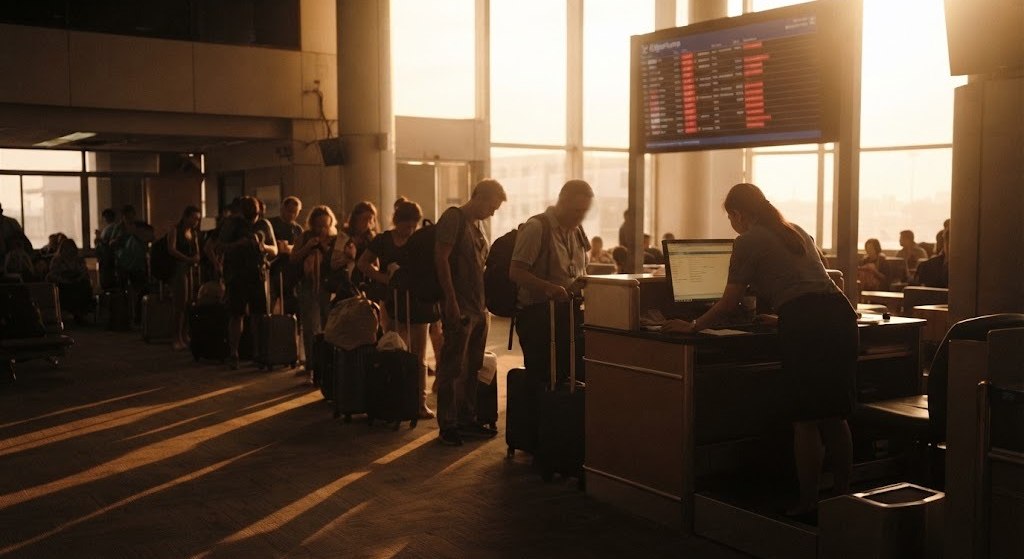
The first ten minutes decide how much of the day survives, and the two channels move at completely different speeds. I start a rebooking in the app while I am still listening to hold music, because the app often holds seats the phone line has not released yet. On a sold-out evening the gap between acting at minute two and minute twenty is usually the last two seats on the next morning.
I keep one number saved for the airline I fly most, since the phone queue sorts by status and by how quickly you reach a human rather than by how long you have waited. Two channels running at once is not impatience, it is the difference between a night in the terminal and a bed.
Rebook yourself before you ask anyone
Most airline apps will move you to the next workable flight without a human, and the automated option beats any counter before ten in the morning. I take the flight that gets the group moving first, then look for the better one afterwards, because a held seat can be changed again and an empty one cannot.
- Move to any viable flight first, even when it is not the one you would have chosen.
- Search again for a better routing and switch if one has appeared.
- Screenshot every confirmation before the app refreshes the screen.
The automation also handles an involuntary change without a fee, which an agent may still charge for if you reach them before the system has caught up. I check the new boarding passes straight away, because an accepted rebooking sometimes keeps the old flight on the pass that prints.
Protect the bookings downstream
A cancelled flight costs more than the flight itself: the transfer, the hotel night, the dinner table with a deposit sitting on it. I call the hotel inside the first half hour with the new arrival time, and I move the transfer onto the new flight number rather than waiting for a driver to notice the change on his own. A hotel told at hour two keeps the room, and one told at hour nine is often sold and rebooked somewhere with a worse mattress.
The same message goes to the guide, the restaurant holding a deposit and whoever is meant to meet the group at the other end. One update with the new arrival time beats four updates written at different moments, and it stops the plan being changed twice by two different people.
Check what the delay actually pays
For a flight departing the EU the compensation is fixed by distance and does not depend on the fare you bought: 250 euro under 1,500 kilometres, 400 euro between 1,500 and 3,500, and 600 euro above that. Eligibility needs a three-hour arrival delay caused by the airline, so keep the times in writing rather than on a departure board that changes. I file the claim in the same week, while the messages are still in the inbox and nobody has to reconstruct anything from memory.
Meals and hotel nights for an overnight disruption sit outside that calculation and come from the airline directly. Ask for the accommodation voucher before you leave the terminal, because the desk stops issuing them once the queues get long.
For a cancellation the airline must also cover meals and reasonable transport while you wait, and that is claimed at the desk rather than afterwards. Keep the receipts in the same thread as the rebooking confirmation, because a claim rebuilt from memory is refused more often than one assembled in the moment.
Rebuild the day, not the trip
Once the new flight is held, I re-time the first day instead of defending the original plan. Meetings move to the afternoon, the dinner moves a day, and the guide gets one message with the new hour rather than three messages explaining the old one. Nothing about the destination changes, and treating it as a full replanning exercise is how people lose an evening they did not need to lose.
The same rule applies to the day after: I leave it alone until the aircraft is actually in the air. Rebuilding a schedule around a flight that has not departed is work that usually gets done twice, and the second version is rarely calmer than the first.
Put the buffer in before you need it
Trips that absorb a cancellation have slack at the front by design: a connection with ninety minutes rather than fifty, a first night booked for an arrival at seven, and nothing fixed before noon on day one. Those two moves, the first ten minutes and the downstream calls, are the ones that decide whether the rest of the week stands, because everything after them is paperwork and waiting.