This list is built from group trips I have run for companies between twelve and two hundred people: product offsites, incentive weeks, roadshows with four cities in six days. The rules below come from the ones I had to learn twice.
Plan around flight banks, not wishlists
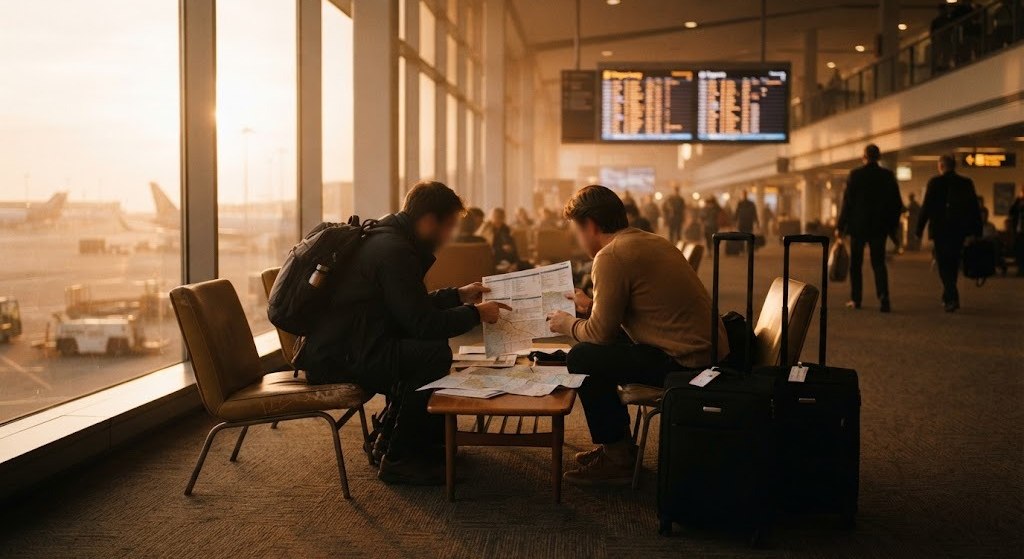
- Check the arrival bank first. If the group cannot land within a three-hour window, the first day is lost to logistics.
- Book the return with a buffer. A 6am departure after a late dinner is how a company earns a reputation internally.
- Prefer one hub over two. Splitting the group across airports doubles your transfer cost and your risk. Why: every extra connection is a delay waiting for a name.
Get the headcount honest before you price anything
- Ask for a named list with roles, not a number. The list changes twice, and each change reopens the rooming list.
- Separate the people who must attend from the people who might. Pricing both groups at once hides the real floor.
- Set a per-head daily cap in writing before venue proposals arrive. Why: proposals expand to fill whatever budget they are shown.
Rooms and rooming lists are where trips break
- Collect preferences once, in one form: bed type, floor, accessibility, roommate pairs.
- Send the rooming list to the hotel seventy-two hours out, not on arrival day.
- Confirm the suite and the meeting-room holds separately, in writing, with names attached. Why: a held suite without a name is not held.
Build the approval chain before the invoices
- Decide who approves changes above a threshold, and put the threshold in the trip brief.
- Give your planner one finance contact. Twelve opinions produce twelve versions of the trip.
- Agree what gets documented as it happens: receipts photographed, changes logged the same day. Why: finance does not care about the story three weeks later.
Give people an evening that is not a dinner
- One group activity beats three forced socials. Schedule it on day two, when nobody is still in transit.
- Always offer an opt-out. The people who skip it are usually the ones who present the next morning.
- Never plan anything that requires the whole group to be on time. Why: somebody's flight landed ninety minutes late.
Leave a contingency line in the budget
- Hold five to eight percent for weather, delays and the transfer that gets doubled.
- Name what it can be spent on, so nobody has to approve a surprise.
- Release it only after the trip, as a real number, not a vague saving. Why: unspent contingency is the easiest way to earn the next budget.
What belongs in the trip brief
The brief is one page and it is the difference between three proposals and eleven. Write it before you speak to any supplier, because the suppliers will otherwise write it for you.
- Purpose in a single sentence, so the venue can be judged against it.
- Dates, headcount with roles, and which airports people actually fly from.
- Cost cap per person per day, stated as a number, with what it includes.
- Non-negotiables: accessibility needs, dietary requirements, one date nobody can move.
- Who signs off changes, and at what value that person must be asked.
Send the brief with a deadline for responses. Proposals that arrive without a deadline arrive in three weeks, by which point the good week is gone and you are negotiating against yourself.
The first day is a logistics day
Treat arrival as a working block rather than a bonus afternoon. Land people inside a three-hour window, move them with one transfer per airport, and give them the first ninety minutes unstructured. Anything scheduled before the jet lag has been walked off gets abandoned anyway, and the abandonment costs more goodwill than an empty first afternoon does.
That evening, one short gathering is enough: same room as tomorrow's session, drinks poured before people arrive, out by nine. The group will do the rest of its networking without you, and everyone starts day two at roughly the same energy level.
After the trip: close the numbers fast
Send the final invoice request within a week, while receipts are still findable and hotel folios are still open for queries. Ask the property for a deviation statement: what was booked, what was used, what was charged. The gap between those two lines is where corporate travel budgets quietly leak, and it is the number that earns you a bigger one next time.
Then write down what broke. A five-line note on delays, room problems or a supplier who missed a hold is worth more than a satisfaction survey, because the next planner can read it before making the same call.
Venue selection: three tests
- Can everyone reach it without a second transfer? A venue twenty minutes from the main airport loses the late arrivals and gains a bad first impression.
- Does the room work for the session, not just the sleep? Check ceiling height, natural light, power sockets per seat and where the coffee is poured during a break.
- What happens if the group grows by five? Confirm the capacity headroom in writing, because the headcount always moves once invitations go out. Why: the overflow room is expensive on day one and impossible on day zero.
Run those three before you compare prices. A cheaper venue that fails one of them costs more in transfers, relocations and goodwill than the discount ever saved.
Start with the arrival bank and the named list. Fix those two and the rest of the trip has something to hang on; leave them loose and every later decision gets more expensive than the one before it.