This list comes from the family flights I have booked with a toddler and a preschooler on the same booking, plus my own trips from before I started writing rules down. What fails first is nearly always the same thing: the cheapest fare sat at the hour when nobody sleeps, and every later choice became damage control. The order below is the order I fix things in.
Book the flight around the nap
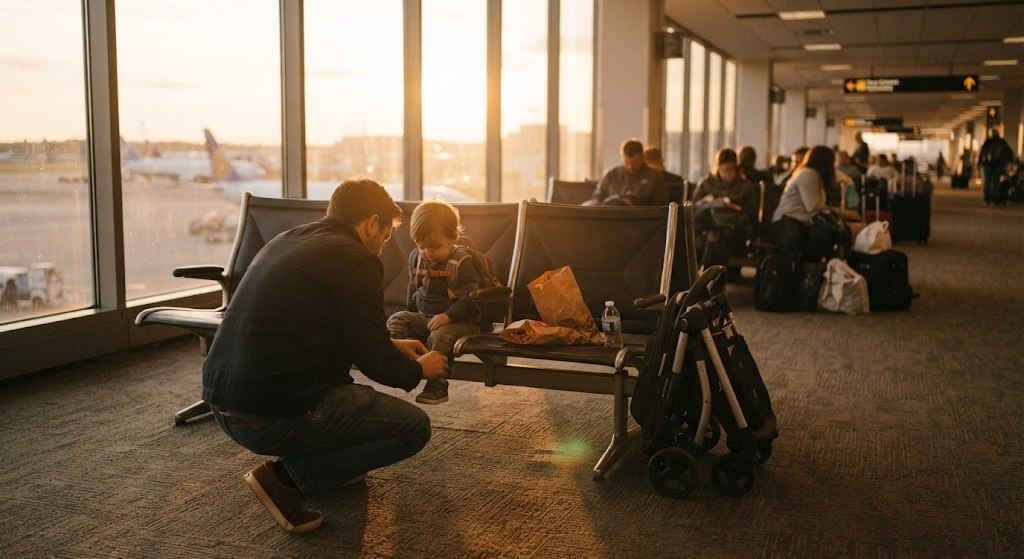
The lowest fare on a family route is almost always at the departure hour when nobody sleeps, and that one decision sets how the whole travel day behaves. I put the departure inside the natural nap or just before bedtime, then let the fare argue with me afterwards. On a three-hour leg that rule is worth more to the family than the fifty euro I might save by leaving at six in the morning.
For short-haul flying the arithmetic is blunt: a departure around eleven lands in time for lunch, while the six in the morning option costs a lost night and a taxi before most cafes have opened. I would rather the family pays twenty euro each for a later departure than spends day one recovering from the start time.
Take the seats while you still can
Seat selection opens at different moments for every airline, and the families who wait end up split across rows with an aisle between them. I set a reminder for the exact window, usually check-in minus twenty-four hours, and I take the row in one action rather than two. Bulkhead seats look generous and often carry the bassinet, but they also come with fixed armrests and no storage under the seat, so for a child who wants to stand up I would rather have a window row two aisles back.
If the airline charges for selection I pay it on the outbound leg and take my chances on the way home, because the flight that matters is the one where everybody is awake at the same hour. The fee usually runs under twenty euro a seat, and it buys an end seat with nobody behind it, which is worth more than any snack voucher.
One bag stays at your feet
Checked luggage turns the first hours of a trip into a negotiation, and a child who needs something now cannot wait for the hold. One bag under the seat carries everything that has to work during the flight, and it stays with a named adult from the gate to the carousel.
- Nappies and wipes for the day, plus two more than the schedule suggests.
- One change of top for the child and one for the adult holding them.
- Water, and one snack the child already eats at home.
- The document wallet: passports, booking references, insurance card in paper.
What stays out of the bag is just as deliberate: a toy can be bought in any airport, a tablet needs charging rather than packing, and the change of clothes for the adults sits in the hold where it belongs. The bag exists for the four hours when nothing else is reachable, and it should survive being the only thing that arrives.
Feed at the climb and at the descent
Cabin pressure bothers ears on the way up and again on the way down, and swallowing is the only thing that actually helps. I time a feed, a bottle or a lollypop for those two phases, and I wake a sleeping child for the descent instead of hoping the ears will settle on their own. It is the one moment where being awake costs less than being asleep, and it takes about ninety seconds to arrange.
One extra habit helps on the way down: a child who refuses a bottle at altitude will often take water through a straw, and the swallowing matters more than what gets swallowed. If the ears still bother them afterwards, a short walk up the aisle and back settles the pressure faster than sitting still and hoping.
Land where the room can take you
The arrival hour decides the transfer, the check-in and whether anyone gets a real dinner that night. I land with enough margin for bags, passports and the drive, then put the family inside thirty minutes of the terminal on the first night. On a family trip I choose that first room for two reasons only: a short walk to somewhere that serves food, and a bathroom nobody has to queue for at six in the morning.
Long transfers after long flights are where small children stop cooperating, and the cost of that is paid by the adults for the rest of the evening. A room near the airport is not the trip, it is the arrival, and I treat it as a separate booking rather than a compromise on the holiday itself.
Keep the first evening boring
The first evening is where family trips come apart: a late landing, a new room, a restaurant with a queue, and a child who has been awake since before dawn. I keep it deliberately plain, with a short walk, something familiar to eat and an early start to the night, and I accept that the day ends without a single planned thing. If only two fixes survive from this list, make them the departure hour and the first room, because the rest can be repaired on the spot once you have landed.